
[Editorial]
You don’t need me to tell you how the UK has been affected by a seemingly never ending series of severe weather events in recent weeks.
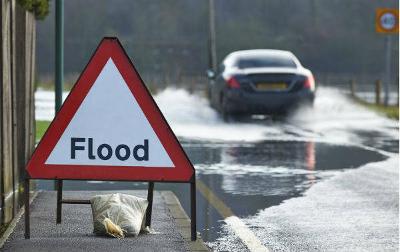
Various named storms brought strong winds, rain, and even snow to parts of the country, causing rail closures, road blockages, school shutdowns, and property damage as rivers burst their banks and ground water levels rose. Flood alerts and warnings remain in force across England, especially in the South and parts of the Midlands, as saturated ground and swollen rivers continue to pose hazards.
I’ve not been immune to these conditions, with flooding taking me offline and leading to me typing this to the sound of dehumidifiers and a fan heater. Consequently, I’ve had to suspend updates on RXTV to deal with more pressing priorities.
Nevertheless, the cycle of news has continued apace, with more media outlets now cottoning on the expected end of digital terrestrial TV in the mid-2030s, something that you would have read time and time again on RXTV in recent years…
Are we really ready for IP transition?
The weather has highlighted how some services in the UK are lacking resilience. Long after power was restored, broadband services remained down in some areas, putting pressure on mobile networks as residents tried to stay connected.
What didn’t fail is regular broadcast TV and radio. Beyond relatively short-lived interruptions to smaller relays in areas already suffering a power cut, TV and radio were back on before the internet, or if received from one of the UK’s main transmitters – never went away. The current state of the UK’s internet infrastructure and the speed at which services can be restored highlights a major flaw in a current plans to switch to all-IP TV. Although many homes can now benefit from full fibre broadband, it seems at present as if this increasingly essential utility still suffers from slow recovery when things go wrong. Just ask those in Cornwall who have been offline for a month.
If there’s a power cut, National Grid publishes details of outages and estimated fix times online. Or you can call 105 from your mobile. For broadband networks, the information isn’t always easy to find, if available at all, with network operators hiding behind your internet service provider. In reality, that means you have to do battle with their AI chatbots or call centres designed to thwart all attempts at contacting them.
There’s clearly a lot of work to do to make internet connectivity more resilient, including mobile fallback options which suffer when too many users overwhelm the network in one area. This really does need sorting if a full transition to IP is to happen in broadcasting. Otherwise it’ll leave people – often the most vulnerable in society – cut off from trusted news sources.
These are all important topics that certainly need scrutinising and seem notably absent in lobbyists’ attempts to speed up the end of traditional broadcasting.
Fortunately in terms of connectivity, as you may expect from a website publisher, I am a little more prepared with mobile backup and ample data (if the networks don’t get overloaded, otherwise it feels like a return to dial-up internet, certainly no streaming possible).
Unfortunately, there’s only so much you can do when the water comes, especially in an area not normally affected by this, and that’s where I’ve come unstuck.
I’m working on options to resume a degree of service to this website, independent of broadcasters, stakeholders, lobbyists and most definitely working outside of the London bubble.
In the meantime, thanks for reading, take care and stay dry…
Regards,
Marc Thornham